Lady Bristow and John Bristow’s mother–son relationship
The Cuckoo's CallingLady Bristow and John Bristow’s mother–son relationship is framed as a painful gap between John’s performance of filial devotion and the family history as Cormoran Strike reconstructs it. Strike argues that John was repeatedly overshadowed by Charlie and then Lula, and that his mother’s failing health eventually became a means by which he could hide the truth about Lula’s death.
Family hierarchy and John’s grievance
During the confrontation, Strike challenges John’s image of himself as the dutiful son. He says that John had fawned over Lady Bristow and played the devoted child without ever coming first with her: she had loved Charlie most, Strike says, and after Charlie died the family’s attention turned to Lula. The perceived pattern is one of repeated displacement—first by the admired older brother, then by the adopted girl who arrived in the family after his death.
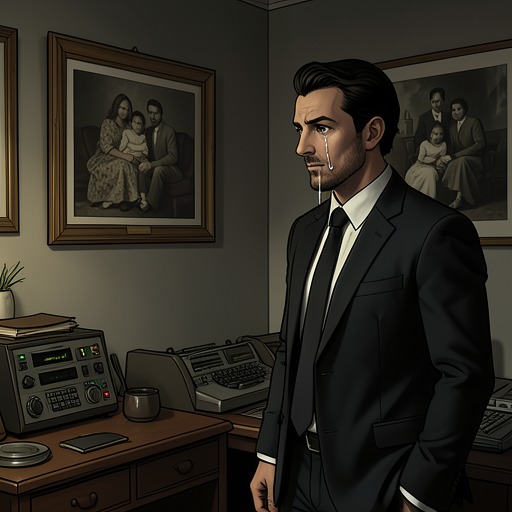
Strike makes the absence of John’s photograph by his mother’s deathbed a pointed detail in that argument. He says the pictures there were of Charlie and Lula, the two children she loved. The observation gives physical form to the exclusion John allegedly felt: in Strike’s account, even at the end of her life, the family’s visible tokens of affection did not include him. The relationship is therefore described less through an exchange between mother and son than through the hierarchy Strike says shaped John’s sense of his place in the family.
Adoption and the return of an old injury
Strike connects John’s grievance to the circumstances of Lula’s arrival. He recalls John’s tears when he described Lula being carried up the drive into the family home and says John’s parents had not taken him with them to collect her; they had left him at home. Strike interprets the episode as a second experience of being made lesser: after Charlie’s death, John might have expected to become the focus of parental attention, but Lula’s adoption brought another beloved child into the family instead.
This is Strike’s accusatory reconstruction during a confrontation, not a neutral account of Lady Bristow’s private feelings. Its force lies in the contrast it draws between John’s outward role as a devoted son and the resentment Strike attributes to him. Strike suggests that the injury did not remain a childhood complaint: he argues that the prospect of becoming his sick mother’s only remaining child could have made Lula’s death seem advantageous to John, and that he relished the idea of no longer losing out to a more lovable sibling.
Charlie’s death and the concealed accusation
The relationship is further complicated by Strike’s account of Charlie’s death. He alleges that Tony saw John cycling away after pushing Charlie over at the quarry and told John’s parents that he believed John had done it. In Strike’s telling, their father struck Tony and their mother fainted; Tony was ultimately expelled from the house. Strike disputes the family’s supposed explanation that Tony was rejected for insulting Lady Bristow’s parenting, arguing instead that Tony had accused her of raising a psychopath.
Strike says Tony later kept quiet because he could not face a family scandal. When the Bristows planned to adopt a girl, Tony called to try to stop it, suggesting that his fear about John’s conduct predated Lula’s death. Yet Tony’s silence and John’s own fear of being questioned turned the family secret into a mutual trap. Strike alleges that Tony supplied John with an alibi for Lula’s murder, while John backed Tony’s account of being at Lady Bristow’s flat. Each had reason to avoid asking what the other was hiding.
Illness, alibi, and the betrayal of trust
The mother–son relationship becomes directly instrumental in the concealment of Lula’s death. Strike says John returned to his mother’s home after fleeing the scene, made food for her, changed the time on her clock, and woke her. Lady Bristow consequently believed that she and John had been talking about Charlie at the precise time Lula fell to her death. Her memory of an ordinary conversation became, as Strike presents it, a false alibi that John had deliberately arranged.
Strike calls her a Valium-addled mother and identifies her as the last alibi John has left. The phrase makes the imbalance plain: Lady Bristow, ill and dependent, is not in a position to test her son’s account, while John can use her trust and confused sense of time to obscure his actions. His care for her—preparing food and waking her—thus sits beside the alleged manipulation of her memory. The relationship’s final shape is not simply that of an overlooked son seeking maternal affection, but of a son whose performance of care helps turn his mother into unwitting cover for a crime.